
Ochre-faced Tody-Flycatcher vs Cliff Flycatcher
Poecilotriccus plumbeiceps contro Hirundinea ferruginea
Fai un quiz con Ochre-faced Tody-Flycatcher e Cliff Flycatcher
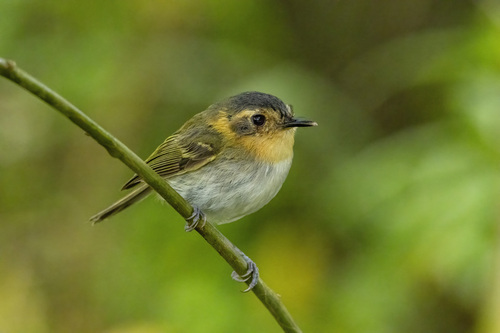 Ochre-faced Tody-Flycatcher
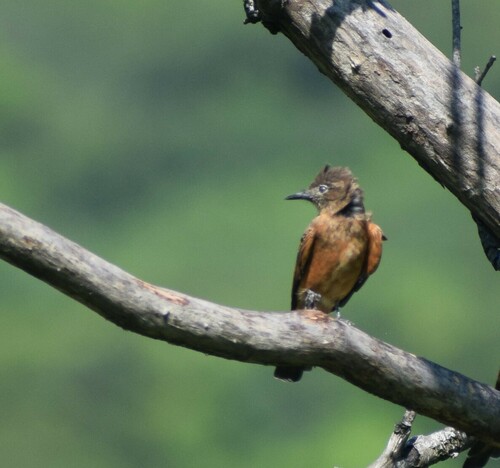 Cliff Flycatcher
In breve
L'Ochre-faced Tody-Flycatcher è meglio identificabile per i suoi lati chiari e buffi della testa e per le auricolari olivastre in contrasto, mentre il Cliff Flycatcher è più robusto con un diverso schema di piumaggio. Entrambe le specie possono essere trovate in aree forestali, ma i loro comportamenti e habitat differiscono significativamente.
Consigli di identificazione
Cerca i lati chiari e buffi della testa e le auricolari olivastre nell'Ochre-faced Tody-Flycatcher. Nota la dimensione più piccola e il comportamento di foraggiamento solitario o in coppia nella vegetazione densa.
Taglia
Il Cliff Flycatcher è generalmente più robusto rispetto al più piccolo Ochre-faced Tody-Flycatcher.
Piumaggio
L'Ochre-faced Tody-Flycatcher ha lati chiari e buffi della testa con una corona e auricolari olivastri, mentre il Cliff Flycatcher non condivide questo specifico schema della testa.
Comportamento
L'Ochre-faced Tody-Flycatcher foraggia solitariamente o in coppie con brevi voli nella sottobosco, mentre il comportamento del Cliff Flycatcher non è dettagliato qui.
Habitat
L'Ochre-faced Tody-Flycatcher si trova nel sottobosco delle foreste umide. L'habitat del Cliff Flycatcher non è specificato qui, ma differisce dalla preferenza per la vegetazione densa del Tody-Flycatcher.
Ochre-faced Tody-Flycatcher · Cliff Flycatcher · I miei uccelli difficili