Birdr

Ochre-faced Tody-Flycatcher vs Cliff Flycatcher

Poecilotriccus plumbeiceps versus Hirundinea ferruginea

Play a quiz with Ochre-faced Tody-Flycatcher and Cliff Flycatcher
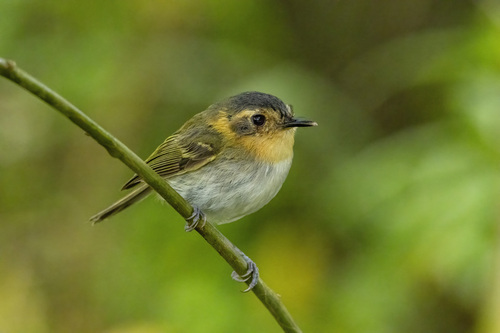
Ochre-faced Tody-Flycatcher (Poecilotriccus plumbeiceps) Ochre-faced Tody-Flycatcher
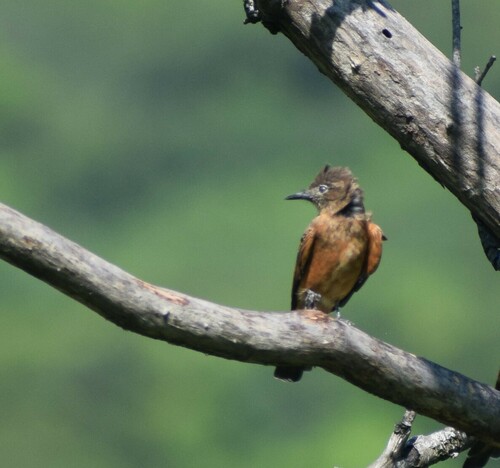
Cliff Flycatcher (Hirundinea ferruginea) Cliff Flycatcher

Media

Loading…

In short

The Ochre-faced Tody-Flycatcher and the Cliff Flycatcher are both small flycatchers but differ significantly in habitat preference and plumage. The Ochre-faced Tody-Flycatcher is typically found in dense forest understory, while the Cliff Flycatcher is more often seen in open areas near cliffs. Key plumage differences include the ochre face of the Tody-Flycatcher versus the rufous underparts of the Cliff Flycatcher.

Identification tips

  1. Look for the ochre face and olive crown of the Ochre-faced Tody-Flycatcher. 2. Note the rufous underparts and open cliffside habitat for the Cliff Flycatcher. 3. Observe behavior: Tody-Flycatchers are more secretive and found in dense vegetation, while Cliff Flycatchers are more conspicuous and found in open areas.

Size

Both species are small, but the Cliff Flycatcher is generally larger and more elongated compared to the compact Ochre-faced Tody-Flycatcher.

Plumage

The Ochre-faced Tody-Flycatcher has bright buffy sides to the head with a contrasting olive spot on the auriculars and an olive crown. In contrast, the Cliff Flycatcher has rufous underparts and a more uniform coloration without the distinct facial markings.

Behaviour

The Ochre-faced Tody-Flycatcher forages solitarily or in pairs with short sallies in dense vegetation. The Cliff Flycatcher is often seen perched openly on cliffs, making longer flights to catch insects.

Habitat

Ochre-faced Tody-Flycatchers are typically found in the understory of humid forests, while Cliff Flycatchers prefer open areas near cliffs or rocky outcrops.

Submit a better description

Use the same sections as the comparison. Your text is published immediately.

The Ochre-faced Tody-Flycatcher and the Cliff Flycatcher are both small flycatchers but differ significantly in habitat preference and plumage. The Ochre-faced Tody-Flycatcher is typically found in dense forest understory, while the Cliff Flycatcher is more often seen in open areas near cliffs. Key plumage differences include the ochre face of the Tody-Flycatcher versus the rufous underparts of the Cliff Flycatcher.

  1. Look for the ochre face and olive crown of the Ochre-faced Tody-Flycatcher. 2. Note the rufous underparts and open cliffside habitat for the Cliff Flycatcher. 3. Observe behavior: Tody-Flycatchers are more secretive and found in dense vegetation, while Cliff Flycatchers are more conspicuous and found in open areas.

Both species are small, but the Cliff Flycatcher is generally larger and more elongated compared to the compact Ochre-faced Tody-Flycatcher.

The Ochre-faced Tody-Flycatcher has bright buffy sides to the head with a contrasting olive spot on the auriculars and an olive crown. In contrast, the Cliff Flycatcher has rufous underparts and a more uniform coloration without the distinct facial markings.

The Ochre-faced Tody-Flycatcher forages solitarily or in pairs with short sallies in dense vegetation. The Cliff Flycatcher is often seen perched openly on cliffs, making longer flights to catch insects.

Ochre-faced Tody-Flycatchers are typically found in the understory of humid forests, while Cliff Flycatchers prefer open areas near cliffs or rocky outcrops.

Discard your changes?

You have unsaved edits. If you leave now, those changes will be lost.

Ochre-faced Tody-Flycatcher · Cliff Flycatcher · My Tricky Birds