Birdr

tororó vs gibão-de-couro

Poecilotriccus plumbeiceps versus Hirundinea ferruginea

Jogue um quiz com tororó e gibão-de-couro
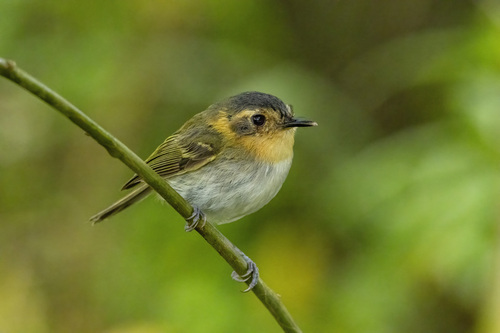
tororó (Poecilotriccus plumbeiceps) tororó
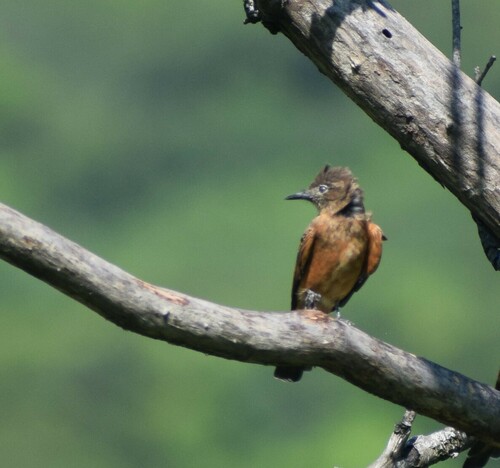
gibão-de-couro (Hirundinea ferruginea) gibão-de-couro

Mídia

Carregando…

Em resumo

O tororó é melhor identificado por suas laterais brilhantes e amareladas da cabeça e auriculares oliváceos contrastantes, enquanto o gibão-de-couro é mais robusto com um padrão de plumagem diferente. Ambas as espécies podem ser encontradas em áreas florestais, mas seus comportamentos e habitats diferem significativamente.

Dicas de identificação

Procure as laterais brilhantes e amareladas da cabeça e auriculares oliváceos no tororó. Note o tamanho menor e o comportamento de forrageio solitário ou em pares na vegetação densa.

Tamanho

O gibão-de-couro é geralmente mais robusto em comparação com o menor tororó.

Plumagem

O tororó tem laterais brilhantes e amareladas da cabeça com uma coroa e auriculares oliváceos, enquanto o gibão-de-couro não compartilha esse padrão específico de cabeça.

Comportamento

O tororó forrageia solitariamente ou em pares com curtas investidas no sub-bosque, enquanto o comportamento do gibão-de-couro não é detalhado aqui.

Habitat

O tororó é encontrado no sub-bosque de florestas úmidas. O habitat do gibão-de-couro não é especificado aqui, mas difere da preferência de vegetação densa do tororó.

Enviar uma descrição melhor

Use as mesmas seções da comparação. Seu texto é publicado na hora.

The Ochre-faced Tody-Flycatcher is best identified by its bright buffy sides to the head and contrasting olive auriculars, while the Cliff Flycatcher is more robust with a different plumage pattern. Both species can be found in forested areas, but their behaviors and habitats differ significantly.

Look for the bright buffy sides to the head and olive auriculars in the Ochre-faced Tody-Flycatcher. Note the smaller size and solitary or paired foraging behavior in dense vegetation.

The Cliff Flycatcher is generally more robust compared to the smaller Ochre-faced Tody-Flycatcher.

Ochre-faced Tody-Flycatcher has bright buffy sides to the head with an olive crown and auriculars, whereas the Cliff Flycatcher does not share this specific head pattern.

Ochre-faced Tody-Flycatcher forages solitarily or in pairs with short sallies in the understory, while the Cliff Flycatcher's behavior is not detailed here.

Ochre-faced Tody-Flycatcher is found in the understory of humid forests. The Cliff Flycatcher's habitat is not specified here, but it differs from the dense vegetation preference of the Tody-Flycatcher.

Descartar as alterações?

Você tem edições não salvas. Se sair agora, elas serão perdidas.

tororó · gibão-de-couro · Minhas aves difíceis