
Carpinterito Variable vs Carpinterito Uruguayo
Picumnus cirratus frente a Picumnus nebulosus
Juega un quiz con Carpinterito Variable y Carpinterito Uruguayo
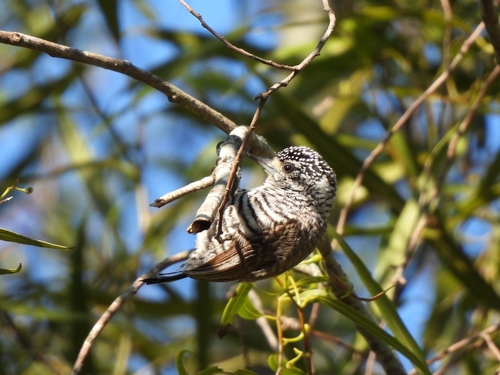 Carpinterito Variable
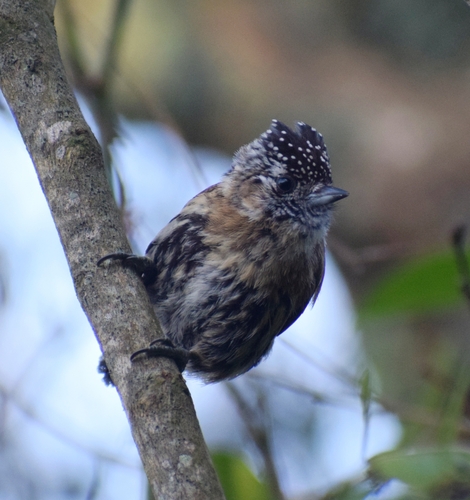 Carpinterito Uruguayo
En breve
Los juveniles de Carpinterito Variable muestran un patrón de barrado más pesado arriba y abajo, mientras que los juveniles de Carpinterito Uruguayo tienen una corona marrón opaca con estrías pálidas y menos contraste en general. Para los adultos, enfócate en las partes inferiores: el Carpinterito Variable tiene un barrado blanco y negro audaz debajo, mientras que el Carpinterito Uruguayo tiene un vientre y flancos de color beige con estrías. Ambas especies comparten una corona negra con una mancha roja en la frente en los machos, pero los tonos de la cara y las partes superiores difieren sutilmente. En áreas de superposición, prestar atención cuidadosa al patrón de las partes inferiores y al color de la cara es la separación de campo más confiable.
Consejos de identificación
- Partes superiores juveniles: Los juveniles de Carpinterito Variable muestran un barrado obvio en las partes superiores y un barrado más pesado abajo, mientras que los juveniles de Carpinterito Uruguayo tienen una corona marrón opaca con estrías pálidas y un barrado menos distintivo. Usa esto para aves que carecen del patrón de la corona de los adultos.
- Patrón de partes inferiores en adultos: El Carpinterito Variable (todas las subespecies) muestra un barrado negro audaz en las partes inferiores blancas, a veces con un tinte beige. El Carpinterito Uruguayo tiene partes inferiores de color marrón beige con estrías oscuras o estrías anchas de color negro en los flancos, no un barrado nítido. Esta es la mejor marca de campo para los adultos.
- Color de la cara: La cara del Carpinterito Variable es de color marrón beige oscuro con barras negras tenues y una franja blanca detrás del ojo (en el nominativo), mientras que la cara del Carpinterito Uruguayo es de un marrón oliva más oscuro con algo de blanco pero carece de una franja post-ocular clara. Las subespecies de Carpinterito Variable pueden carecer de la franja blanca, por lo que esto es un apoyo pero no definitivo.
- Tono de las partes superiores: El Carpinterito Variable tiene partes superiores de color marrón grisáceo o marrón opaco (a veces débilmente barradas), mientras que el Carpinterito Uruguayo es de un marrón oliva más cálido con un tinte beige o oxidado. Esto es sutil y se usa mejor con buena luz.
- Patrón de la cola: Ambas especies tienen colas oscuras con blanco en las plumas internas de las plumas más internas y marcas blancas en los pares exteriores, pero la cola del Carpinterito Uruguayo es negra (no marrón) y el blanco es una estría en la web exterior de los tres pares exteriores. Este es un punto menor pero puede ayudar en vistas cercanas.
- Patrón de la corona (adultos): Los machos de ambas especies tienen una corona negra con una mancha roja en la frente y manchas blancas en otros lugares; las hembras carecen del rojo. Esto no es un separador entre estos dos.
- Confusión de subespecies: Algunas subespecies de Carpinterito Variable (por ejemplo, P. c. tucumanus, P. c. pilcomayensis) tienen menos rojo en la corona y más tonos grisáceos o beige, que pueden parecerse al Carpinterito Uruguayo en color pero no en el patrón de las partes inferiores.
- Tamaño y estructura: Ambas especies son casi idénticas en tamaño y estructura. No confíes en el tamaño o la forma del pico para la separación.
- Vocalizaciones: Si escuchas un 'seep' o 'cheep' repetitivo o un silbido de alarma parecido al de un grillo, es probable que estés escuchando al Carpinterito Uruguayo. La falta de vocalización no es diagnóstica.
- Distribución: Si estás fuera de Argentina, Brasil o Uruguay, casi seguramente estás viendo al Carpinterito Variable. Dentro de la zona de superposición, usa el plumaje.
- Diferencias de sexo: En ambas especies, solo los machos tienen rojo en la frente; las hembras tienen manchas blancas en la corona. Esto no separa las dos especies pero ayuda con la determinación del sexo.
- Posado vs. en vuelo: La mayoría de las marcas de campo son visibles en aves posadas. En vuelo, busca la extensión y el patrón del barrado de las partes inferiores frente a las estrías, y cualquier patrón visible en la cara.
- Iluminación y desgaste: El barrado o las estrías tenues pueden ser difíciles de juzgar en poca luz o en aves desgastadas. Enfócate en la audacia y el tipo de marcas en las partes inferiores.
- Confusión de inmaduros: Las aves jóvenes de ambas especies son más opacas, pero solo el Carpinterito Variable muestra un barrado fuerte arriba y abajo en juveniles.
- Percusión: Si observas una percusión irregular, especialmente en bambú, esto apoya al Carpinterito Uruguayo, pero la ausencia de percusión no es diagnóstica.
Tamaño
Ambas especies son muy similares en tamaño, con el Carpinterito Variable de aproximadamente 10 cm de largo y el Carpinterito Uruguayo de 10–11 cm. El Carpinterito Uruguayo es ligeramente más pesado en promedio (11–12 g) que la mayoría de los Carpinteritos Variables (6.3–12 g), pero esta diferencia no es visible en el campo. La estructura, la forma del pico y el jizz no se describen como diferentes en las fuentes disponibles.
Plumaje
-
Juveniles: Los juveniles de Carpinterito Variable son en general más opacos y oscuros que los adultos, con una corona sin manchas, un barrado más obvio en las partes superiores y un barrado más pesado en las partes inferiores. Los juveniles de Carpinterito Uruguayo también son más opacos que los adultos pero tienen una corona marrón opaca con estrías pálidas, careciendo del fuerte barrado del juvenil de Carpinterito Variable.
-
Adultos: Ambos machos tienen una corona negra con una mancha roja en la frente y manchas blancas en otros lugares; las hembras carecen del rojo. El Carpinterito Variable tiene una cara mayormente de color marrón beige oscuro con barras negras tenues y una franja blanca post-ocular (en el nominativo), partes superiores marrón opaco (a veces débilmente barradas) y partes inferiores que son blancas con un barrado negro audaz y un tinte beige. El Carpinterito Uruguayo tiene una cara de color marrón oliva más oscuro con algo de blanco, partes superiores de color marrón oliva cálido con un tinte beige o oxidado, y partes inferiores que son de color marrón beige con estrías oscuras o estrías anchas de color negro en los flancos, no el barrado nítido del Carpinterito Variable. El patrón de la cola es similar: ambos tienen colas mayormente oscuras con blanco en las plumas internas de las plumas más internas y manchas o estrías blancas en los pares exteriores, pero la cola del Carpinterito Uruguayo es negra (no marrón) y el blanco está en la web exterior de los tres pares exteriores.
-
Variación de subespecies: El Carpinterito Variable muestra una marcada variación subspecífica en el barrado de la cara y las partes inferiores, pero siempre tiene más barrado abajo que el Carpinterito Uruguayo. Algunas subespecies (por ejemplo, P. c. tucumanus, P. c. pilcomayensis) tienen menos rojo en la corona y más tonos grisáceos o beige, que pueden superponerse con los tonos del Carpinterito Uruguayo pero no con sus partes inferiores estriadas.
Comportamiento
No se describen diferencias de comportamiento entre estas dos especies en las fuentes disponibles. Ambas son pájaros carpinteros pequeños y activos que probablemente se vean forrajeando en ramas pequeñas o bambú, pero esto no es diagnóstico.
Hábitat
Ambas especies se superponen en Argentina, Brasil y Uruguay, pero el Carpinterito Variable tiene un rango más amplio que se extiende a Bolivia, Guayana Francesa, Guyana y Paraguay. Las preferencias de hábitat no se detallan en las notas, por lo que el contexto no es un separador confiable donde sus rangos se superponen.
Voz
Solo se describe la voz del Carpinterito Uruguayo: emite un 'seep' o 'cheep' repetitivo, a veces formando un breve trino, y un silbido de alarma agudo, parecido al de un grillo. También percute de manera irregular, especialmente en bambú. No se proporcionan detalles vocales para el Carpinterito Variable, por lo que la voz no es un separador confiable a menos que escuches los llamados o la percusión descritos del Carpinterito Uruguayo.
Carpinterito Variable · Carpinterito Uruguayo · Mis aves difíciles