
Zebradwergspecht vs Bruinborstdwergspecht
Picumnus cirratus versus Picumnus nebulosus
Speel een quiz met Zebradwergspecht en Bruinborstdwergspecht
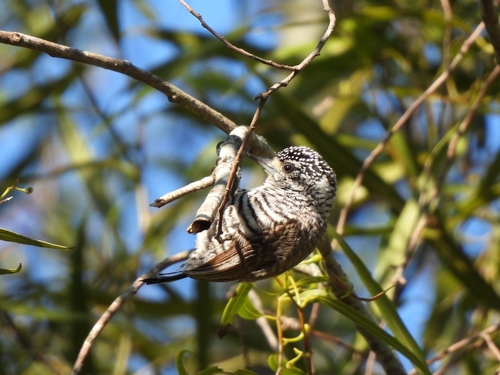 Zebradwergspecht
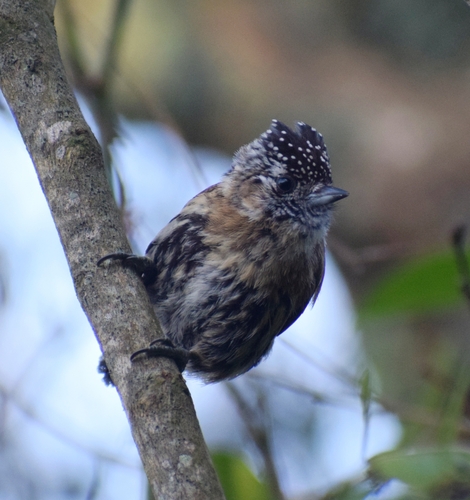 Bruinborstdwergspecht
Kort gezegd
Jongere Zebradwergspechten vertonen zwaardere streping boven en onder, terwijl jongere Bruinborstdwergspechten een doffe bruine kroon hebben met bleke strepen en minder contrast in het algemeen. Voor volwassenen, focus op de onderdelen: Zebradwergspecht is gedurfd gestreept in wit en zwart onder, terwijl Bruinborstdwergspecht een buffy, gestreepte buik en flanken heeft. Beide soorten delen een zwarte kap met een rode voorhoofdsvlek bij mannetjes, maar de kleuren van het gezicht en de bovenkant verschillen subtiel. In overlappend gebied is zorgvuldige aandacht voor het patroon van de onderdelen en de kleur van het gezicht de meest betrouwbare veldscheiding.
Herkenningstips
- Jongere bovenkant: Jongere Zebradwergspechten vertonen duidelijke streping op de bovenkant en zwaardere streping onder, terwijl jongere Bruinborstdwergspechten een doffe bruine kroon hebben met bleke strepen en minder duidelijke streping. Gebruik dit voor vogels zonder volwassen kap patroon.
- Volwassen onderdeel patroon: Zebradwergspecht (alle ondersoorten) vertoont gedurfde zwarte streping op witte onderdelen, soms met een buff tint. Bruinborstdwergspecht heeft buffachtige bruine onderdelen met donkere strepen of brede zwartachtige strepen op de flanken, geen scherpe streping. Dit is het beste veldkenmerk voor volwassenen.
- Gezichtskleur: Het gezicht van Zebradwergspecht is donker buff-bruin met vage zwartachtige strepen en een witte streep achter het oog (in nominatie), terwijl het gezicht van Bruinborstdwergspecht donkerder olijfbruin is met wat wit maar geen duidelijke post-oculaire streep heeft. Ondersoorten van Zebradwerg kunnen de witte streep missen, dus dit is ondersteunend maar niet definitief.
- Bovenkant tint: Zebradwergspecht heeft dof bruinachtige of grijzige bovenkant (soms vaag gestreept), terwijl Bruinborstdwergspecht warmer olijfbruin is met een buff of roestachtige tint. Dit is subtiel en het beste te gebruiken in goed licht.
- Staartpatroon: Beide hebben donkere staarten met wit op de binnenwebben van de binnenste veren en witte markeringen op de buitenste paren, maar de staart van Bruinborstdwergspecht is zwart (niet bruin) en het wit is een streep op de buitenweb van de buitenste drie paren. Dit is een klein punt maar kan helpen bij close views.
- Kap patroon (volwassenen): Mannetjes van beide soorten hebben een zwarte kap met een rode voorhoofdsvlek en witte vlekken elders; vrouwtjes missen de rode. Dit is geen scheiding tussen deze twee.
- Ondersoorten verwarring: Sommige ondersoorten van Zebradwergspecht (bijv. P. c. tucumanus, P. c. pilcomayensis) hebben minder rood op de kroon en meer grijzige of buffachtige tinten, die kunnen lijken op de kleuren van Bruinborstdwergspecht maar niet op het onderdeelpunt.
- Grootte en structuur: Beide soorten zijn bijna identiek in grootte en structuur. Vertrouw niet op grootte of snavelvorm voor scheiding.
- Vocalisaties: Als je een herhalend 'seep' of 'cheep' of een krekelachtige alarmfluit hoort, hoor je waarschijnlijk Bruinborstdwergspecht. Gebrek aan vocalisatie is niet diagnostisch.
- Bereik: Als je buiten Argentinië, Brazilië of Uruguay bent, zie je bijna zeker Zebradwergspecht. Binnen de overlapzone, gebruik het verenkleed.
- Seksverschillen: Bij beide soorten hebben alleen mannetjes rood op het voorhoofd; vrouwtjes hebben witte vlekken over de kap. Dit scheidt de twee soorten niet, maar helpt bij het geslacht.
- Zittend vs. in vlucht: De meeste veldkenmerken zijn zichtbaar op zittende vogels. In vlucht, let op de omvang en het patroon van onderdeelsstreping vs. streping, en elk zichtbaar gezichtspatroon.
- Verlichting en slijtage: Vage streping of streping kan moeilijk te beoordelen zijn in slecht licht of op versleten vogels. Focus op de gedurfde en type onderdeelmaken.
- Onvolwassen verwarring: Jonge vogels van beide soorten zijn doffer, maar alleen Zebradwerg toont sterke streping boven en onder bij juvenielen.
- Drummen: Als je onregelmatig drummen observeert, vooral op bamboe, ondersteunt dit Bruinborstdwergspecht, maar afwezigheid van drummen is niet diagnostisch.
Grootte
Beide soorten zijn zeer vergelijkbaar in grootte, met Zebradwergspecht ongeveer 10 cm lang en Bruinborstdwergspecht 10–11 cm. Bruinborstdwergspecht is gemiddeld iets zwaarder (11–12 g) dan de meeste Zebradwergspechten (6.3–12 g), maar dit verschil is niet zichtbaar in het veld. Structuur, snavelvorm en jizz worden niet als verschillend beschreven in de beschikbare bronnen.
Verenkleed
-
Jongeren: Jongere Zebradwergspechten zijn over het algemeen doffer en donkerder dan volwassenen, met een ongevlekte kroon, meer duidelijke streping op de bovenkant, en zwaardere streping op de onderdelen. Jongere Bruinborstdwergspechten zijn ook doffer dan volwassenen maar hebben een doffe bruine kroon met bleke buffachtige strepen, zonder de sterke streping van jongere Zebradwerg.
-
Volwassenen: Beide mannetjes hebben een zwarte kap met een rode voorhoofdsvlek en witte vlekken elders; vrouwtjes missen de rode. Zebradwergspecht heeft een voornamelijk donker buff-bruin gezicht met vage zwartachtige strepen en een witte post-oculaire streep (in nominatie), dof bruinachtige bovenkant (soms vaag gestreept), en onderdelen die wit zijn met gedurfde zwarte streping en een buff tint. Bruinborstdwergspecht heeft een donkerder olijfbruin gezicht met wat wit, warme olijfbruin bovenkant met een buff of roestachtige tint, en onderdelen die buffachtig bruin zijn met donkere strepen of brede zwartachtige strepen op de flanken, niet de scherpe streping van Zebradwerg. Het staartpatroon is vergelijkbaar: beide hebben voornamelijk donkere staarten met wit op de binnenwebben van de binnenste veren en witte vlekken of strepen op de buitenste paren, maar de staart van Bruinborstdwergspecht is zwart (niet bruin) en het wit is op de buitenweb van de buitenste drie paren.
-
Ondersoorten variatie: Zebradwergspecht vertoont duidelijke ondersoortvariatie in gezicht en onderdeelsstreping, maar heeft altijd meer streping onder dan Bruinborstdwergspecht. Sommige ondersoorten (bijv. P. c. tucumanus, P. c. pilcomayensis) hebben verminderd rood op de kroon en meer grijzige of buffachtige tinten, die kunnen overlappen met de tinten van Bruinborstdwerg maar niet met zijn gestreepte onderdelen.
Gedrag
Er zijn geen gedragsverschillen beschreven tussen deze twee soorten in de beschikbare bronnen. Beide zijn kleine, actieve spechten die waarschijnlijk worden gezien terwijl ze op kleine takken of bamboe foerageren, maar dit is niet diagnostisch.
Habitat
Beide soorten overlappen in Argentinië, Brazilië en Uruguay, maar Zebradwergspecht heeft een breder bereik dat zich uitstrekt tot Bolivia, Frans-Guyana, Guyana en Paraguay. Habitatvoorkeuren zijn niet gedetailleerd in de aantekeningen, dus context is geen betrouwbare scheiding waar hun bereiken overlappen.
Geluid
Alleen de stem van Bruinborstdwergspecht is beschreven: hij geeft een herhalend 'seep' of 'cheep', soms vormend een korte triller, en een scherpe, krekelachtige alarmfluit. Hij drumt ook onregelmatig, vooral op bamboe. Geen vocale details zijn gegeven voor Zebradwergspecht, dus stem is geen betrouwbare scheiding tenzij je de beschreven roepen of drummen van Bruinborstdwergspecht hoort.
Zebradwergspecht · Bruinborstdwergspecht · Mijn lastige vogels