
White-barred Piculet vs Mottled Piculet
Picumnus cirratus contro Picumnus nebulosus
Fai un quiz con White-barred Piculet e Mottled Piculet
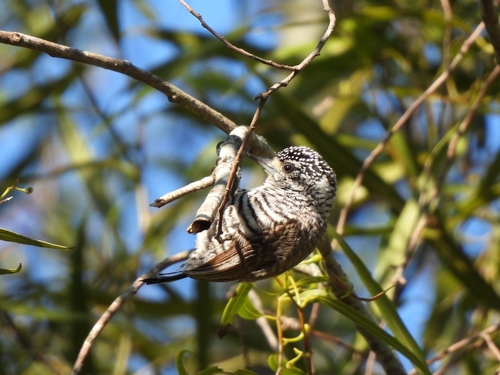 White-barred Piculet
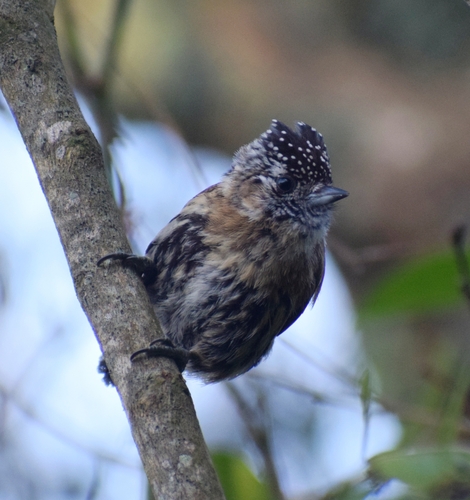 Mottled Piculet
In breve
I giovani White-barred Piculets mostrano barre più pesanti sopra e sotto, mentre i giovani Mottled Piculets hanno una corona marrone opaca con striature chiare e meno contrasto complessivo. Per gli adulti, concentrati sulle parti inferiori: il White-barred Piculet ha barre bianche e nere ben definite sotto, mentre il Mottled Piculet ha un ventre e fianchi color crema striati. Entrambe le specie condividono un cappello nero con una macchia rossa sulla fronte nei maschi, ma i toni del viso e delle parti superiori differiscono sottilmente. Nella zona di sovrapposizione, prestare attenzione al motivo delle parti inferiori e al colore del viso è la separazione sul campo più affidabile.
Consigli di identificazione
- Juvenile upperparts: I giovani White-barred Piculets mostrano barre evidenti sulle parti superiori e barre più pesanti sotto, mentre i giovani Mottled Piculets hanno una corona marrone opaca con striature chiare e barre meno distinte. Usa questo per gli uccelli privi del motivo del cappello adulto.
- Adult underpart pattern: Il White-barred Piculet (tutte le sottospecie) mostra barre nere audaci su parti inferiori bianche, a volte con una sfumatura color crema. Il Mottled Piculet ha parti inferiori marroni color crema con striature scure o ampie striature nere sui fianchi, non barre nette. Questo è il segno sul campo migliore per gli adulti.
- Face color: Il viso del White-barred Piculet è marrone scuro con barre nere deboli e una striscia bianca dietro l'occhio (nella nominata), mentre il viso del Mottled Piculet è marrone oliva scuro con alcune macchie bianche ma privo di una chiara striscia post-oculare. Le sottospecie di White-barred possono mancare della striscia bianca, quindi questo è di supporto ma non definitivo.
- Upperpart tone: Il White-barred Piculet ha parti superiori marroni opache o grigie (a volte leggermente barrate), mentre il Mottled Piculet è di un marrone oliva più caldo con una sfumatura color crema o ruggine. Questo è sottile e meglio utilizzato in buona luce.
- Tail pattern: Entrambi hanno code scure con bianco sulle membrane interne delle piume più interne e segni bianchi sulle coppie esterne, ma la coda del Mottled Piculet è nera (non marrone) e il bianco è una striscia sulla membrana esterna delle tre coppie esterne. Questo è un punto minore ma può aiutare in viste ravvicinate.
- Cap pattern (adults): I maschi di entrambe le specie hanno un cappello nero con una macchia rossa sulla fronte e macchie bianche altrove; le femmine mancano del rosso. Questo non è un separatore tra questi due.
- Subspecies confusion: Alcune sottospecie di White-barred Piculet (ad es., P. c. tucumanus, P. c. pilcomayensis) hanno meno rosso sulla corona e toni più grigi o color crema, che possono assomigliare al Mottled Piculet nel colore ma non nel motivo delle parti inferiori.
- Size and structure: Entrambe le specie sono quasi identiche in dimensioni e struttura. Non fare affidamento su dimensioni o forma del becco per la separazione.
- Vocalizations: Se senti un ripetitivo 'seep' o 'cheep' o un fischio d'allerta simile a un grillo, è probabile che tu stia sentendo il Mottled Piculet. La mancanza di vocalizzazione non è diagnostica.
- Range: Se sei al di fuori di Argentina, Brasile o Uruguay, stai quasi certamente vedendo il White-barred Piculet. All'interno della zona di sovrapposizione, usa il piumaggio.
- Sex differences: In entrambe le specie, solo i maschi hanno rosso sulla fronte; le femmine hanno macchie bianche sul cappello. Questo non separa le due specie ma aiuta con il sesso.
- Perched vs. in flight: La maggior parte dei segni sul campo sono visibili sugli uccelli posati. In volo, cerca l'estensione e il motivo delle barre delle parti inferiori rispetto alle striature, e qualsiasi motivo visibile del viso.
- Lighting and wear: Barre o striature deboli possono essere difficili da giudicare in scarsa luce o su uccelli usurati. Concentrati sull'audacia e sul tipo di marcature delle parti inferiori.
- Immature confusion: I giovani di entrambe le specie sono più opachi, ma solo il White-barred mostra barre forti sopra e sotto nei giovani.
- Drumming: Se osservi un tambureggiamento irregolare, specialmente su bamboo, questo supporta il Mottled Piculet, ma l'assenza di tambureggiamento non è diagnostica.
Taglia
Entrambe le specie sono molto simili in dimensioni, con il White-barred Piculet lungo circa 10 cm e il Mottled Piculet 10–11 cm. Il Mottled Piculet è leggermente più pesante in media (11–12 g) rispetto alla maggior parte dei White-barred Piculets (6.3–12 g), ma questa differenza non è visibile sul campo. La struttura, la forma del becco e il jizz non sono descritti come diversi nelle fonti disponibili.
Piumaggio
-
Juveniles: I giovani White-barred Piculets sono complessivamente più opachi e scuri rispetto agli adulti, con una corona non macchiata, barre più evidenti sulle parti superiori e barre più pesanti sulle parti inferiori. I giovani Mottled Piculets sono anche più opachi rispetto agli adulti ma hanno una corona marrone opaca con striature color crema, mancando delle forti barre del giovane White-barred.
-
Adults: Entrambi i maschi hanno un cappello nero con una macchia rossa sulla fronte e macchie bianche altrove; le femmine mancano del rosso. Il White-barred Piculet ha un viso per lo più marrone scuro con barre nere deboli e una striscia post-oculare bianca (nella nominata), parti superiori marroni opache (a volte leggermente barrate), e parti inferiori bianche con barre nere audaci e una sfumatura color crema. Il Mottled Piculet ha un viso marrone oliva scuro con alcune macchie bianche, parti superiori marroni oliva calde con una sfumatura color crema o ruggine, e parti inferiori marroni color crema con striature scure o ampie striature nere sui fianchi, non le barre nette del White-barred. Il motivo della coda è simile: entrambi hanno per lo più code scure con bianco sulle membrane interne delle piume più interne e macchie o striature bianche sulle coppie esterne, ma la coda del Mottled Piculet è nera (non marrone) e il bianco è sulla membrana esterna delle tre coppie esterne.
-
Subspecies variation: Il White-barred Piculet mostra una marcata variazione sottospecifica nel viso e nelle barre delle parti inferiori, ma ha sempre più barre sotto rispetto al Mottled Piculet. Alcune sottospecie (ad es., P. c. tucumanus, P. c. pilcomayensis) hanno meno rosso sulla corona e toni più grigi o color crema, che possono sovrapporsi ai toni del Mottled Piculet ma non alle sue parti inferiori striate.
Comportamento
Non sono descritte differenze comportamentali tra queste due specie nelle fonti disponibili. Entrambi sono piccole picchi attive che probabilmente vengono viste foraggiando su piccoli rami o bamboo, ma questo non è diagnostico.
Habitat
Entrambe le specie si sovrappongono in Argentina, Brasile e Uruguay, ma il White-barred Piculet ha un'area di distribuzione più ampia che si estende in Bolivia, Guiana Francese, Guyana e Paraguay. Le preferenze di habitat non sono dettagliate nelle note, quindi il contesto non è un separatore affidabile dove le loro aree si sovrappongono.
Voce
Solo la voce del Mottled Piculet è descritta: emette un ripetitivo 'seep' o 'cheep', a volte formando un breve trill, e un fischio d'allerta acuto, simile a un grillo. Tambureggia anche in modo irregolare, specialmente su bamboo. Non sono forniti dettagli vocali per il White-barred Piculet, quindi la voce non è un separatore affidabile a meno che tu non senta i richiami o il tambureggiamento descritti del Mottled Piculet.
White-barred Piculet · Mottled Piculet · I miei uccelli difficili