
Paruline à poitrine baie vs Paruline à flancs marron
Setophaga castanea contre Setophaga pensylvanica
Faire un quiz avec Paruline à poitrine baie et Paruline à flancs marron
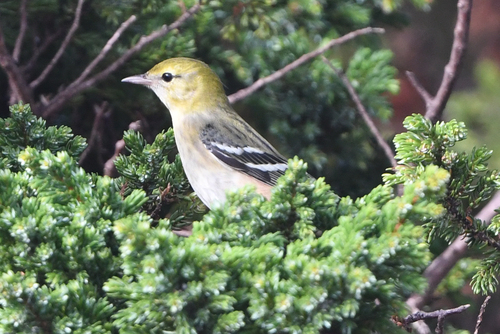 Paruline à poitrine baie
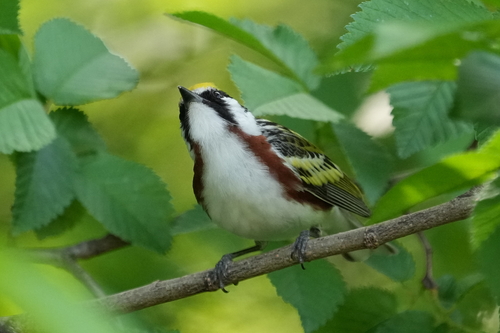 Paruline à flancs marron
En bref
La Paruline à poitrine baie et la Paruline à flancs marron peuvent être distinguées par leur plumage en saison de reproduction : la Paruline à poitrine baie a une poitrine de couleur baie distinctive, tandis que la Paruline à flancs marron présente des flancs marron. En dehors de la saison de reproduction, il peut être plus difficile de les différencier en raison de leur plumage de base similaire.
Conseils d’identification
- Plumage de reproduction : Recherchez la poitrine de couleur baie de la Paruline à poitrine baie par rapport aux flancs marron de la Paruline à flancs marron.
- Plumage non reproducteur : Soyez prudent, car les deux espèces peuvent sembler similaires.
- Comportement : Notez le comportement de recherche actif de la Paruline à flancs marron et sa posture avec la queue relevée.
- Vocalisations : Écoutez les motifs de chant distinctifs de la Paruline à flancs marron.
Plumage
En plumage de reproduction, la Paruline à poitrine baie a une poitrine et des flancs de couleur baie, tandis que la Paruline à flancs marron affiche des flancs marron avec un ventre blanc et une couronne jaune. Les plumages non reproducteurs et juvéniles sont plus similaires, rendant l'identification difficile.
Comportement
Les deux espèces sont insectivores et peuvent consommer des fruits sur leurs lieux d'hivernage. La Paruline à flancs marron est connue pour son comportement de recherche actif, se déplaçant souvent avec la queue relevée.
Voix
La Paruline à flancs marron a deux classes de chants distinctes, y compris le célèbre chant 's'il vous plaît, s'il vous plaît, ravi de' utilisé pour attirer les femelles. Les vocalisations spécifiques de la Paruline à poitrine baie ne sont pas détaillées.
Paruline à poitrine baie · Paruline à flancs marron · Mes oiseaux difficiles