Birdr

Tyran de Wied vs Bruant fauve

Myiarchus tyrannulus contre Passerella iliaca

Faire un quiz avec Tyran de Wied et Bruant fauve
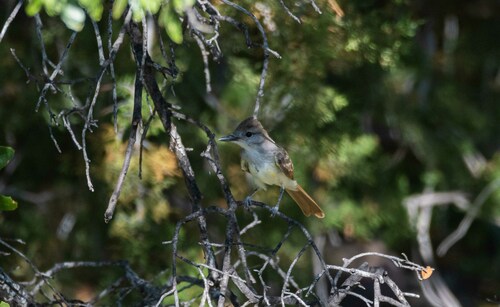
Tyran de Wied (Myiarchus tyrannulus) Tyran de Wied
Bruant fauve (Passerella iliaca) Bruant fauve

Médias

Chargement…

En bref

Le Tyran de Wied et le Bruant fauve sont distincts par leur structure et leur habitat. Le tyran est un oiseau vivant dans la canopée avec un bec fort et légèrement recourbé, tandis que le bruant est une espèce vivant au sol avec un bec conique adapté à l'alimentation des graines. Les vocalisations sont essentielles pour identifier le tyran, tandis que le bruant est plus souvent reconnu par son comportement timide et sa préférence pour la végétation dense.

Conseils d’identification

  1. Cherchez le Tyran de Wied dans la canopée avec un bec fort et légèrement recourbé. 2. Repérez le Bruant fauve au sol ou dans la végétation dense avec un bec conique. 3. Écoutez les vocalisations distinctes du tyran pour confirmer l'identification.

Taille

Le Tyran de Wied est généralement plus grand avec un corps plus robuste par rapport au plus petit et plus compact Bruant fauve.

Plumage

Le Tyran de Wied a un plumage brun plus uniforme avec des variations subtiles, tandis que le Bruant fauve présente plus de variations, souvent avec des tons rouges ou ardoisés selon la sous-espèce.

Comportement

Le Tyran de Wied se trouve souvent dans la canopée, étant plus secret et nichant dans des cavités, tandis que le Bruant fauve est timide et préfère la végétation dense et basse.

Habitat

Le Tyran de Wied habite des régions tropicales et subtropicales, souvent dans des forêts ouvertes, tandis que le Bruant fauve préfère des zones denses et broussailleuses, souvent dans des régions tempérées.

Voix

Les vocalisations sont un identifiant clé pour le Tyran de Wied, avec moins de variation géographique, tandis que le chant du Bruant fauve est moins accentué dans l'identification.

Envoyer une meilleure description

Utilise les mêmes sections que la comparaison. Ton texte est publié tout de suite.

The Brown-crested Flycatcher and Fox Sparrow are distinct in structure and habitat. The flycatcher is a canopy-dwelling bird with a strong, slightly hooked bill, while the sparrow is a ground-dwelling species with a conical bill suited for seed-eating. Vocalizations are critical for identifying the flycatcher, whereas the sparrow is more often recognized by its shy behavior and preference for dense vegetation.

  1. Look for the Brown-crested Flycatcher in the canopy with a strong, slightly hooked bill. 2. Spot the Fox Sparrow on the ground or in dense vegetation with a conical bill. 3. Listen for distinct vocalizations in the flycatcher to confirm identification.

The Brown-crested Flycatcher is generally larger with a more robust body compared to the smaller, more compact Fox Sparrow.

The Brown-crested Flycatcher has a more uniform brown plumage with subtle variations, while the Fox Sparrow exhibits more variation, often with reddish or slate-colored tones depending on the subspecies.

The Brown-crested Flycatcher is often found in the canopy, being more secretive and cavity-nesting, whereas the Fox Sparrow is shy and prefers dense, low vegetation.

The Brown-crested Flycatcher inhabits tropical and subtropical regions, often in open woodlands, while the Fox Sparrow favors dense, shrubby areas, often in temperate regions.

Vocalizations are a key identifier for the Brown-crested Flycatcher, with less geographic variation, while the Fox Sparrow's song is less emphasized in identification.

Abandonner tes modifications ?

Tu as des modifications non enregistrées. Si tu pars maintenant, elles seront perdues.

Tyran de Wied · Bruant fauve · Mes oiseaux difficiles