Birdr

Bruinkoptiran vs Roodstaartgors

Myiarchus tyrannulus versus Passerella iliaca

Speel een quiz met Bruinkoptiran en Roodstaartgors
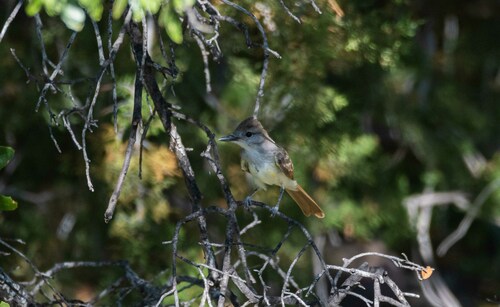
Bruinkoptiran (Myiarchus tyrannulus) Bruinkoptiran
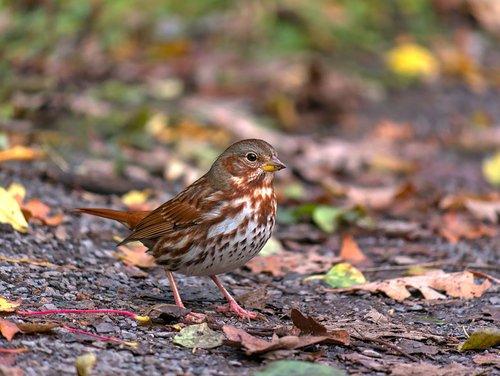
Roodstaartgors (Passerella iliaca) Roodstaartgors

Media

Laden…

Kort gezegd

De Bruinkoptiran en Roodstaartgors zijn verschillend in structuur en habitat. De tiran is een boomtopbewonende vogel met een sterke, licht gebogen snavel, terwijl de gors een grondbewonende soort is met een conische snavel die geschikt is voor het eten van zaden. Vocalisaties zijn cruciaal voor het identificeren van de tiran, terwijl de gors vaker wordt herkend aan zijn schuwe gedrag en voorkeur voor dichte vegetatie.

Herkenningstips

  1. Zoek de Bruinkoptiran in de boomtop met een sterke, licht gebogen snavel. 2. Spot de Roodstaartgors op de grond of in dichte vegetatie met een conische snavel. 3. Luister naar de kenmerkende vocalisaties van de tiran om de identificatie te bevestigen.

Grootte

De Bruinkoptiran is over het algemeen groter met een robuustere lichaamsbouw in vergelijking met de kleinere, compactere Roodstaartgors.

Verenkleed

De Bruinkoptiran heeft een meer uniforme bruine pluimage met subtiele variaties, terwijl de Roodstaartgors meer variatie vertoont, vaak met roodachtige of leisteenkleurige tinten afhankelijk van de ondersoort.

Gedrag

De Bruinkoptiran wordt vaak in de boomtoppen aangetroffen, is meer geheimzinnig en nestelt in holtes, terwijl de Roodstaartgors schuw is en de voorkeur geeft aan dichte, lage vegetatie.

Habitat

De Bruinkoptiran bewoont tropische en subtropische gebieden, vaak in open bossen, terwijl de Roodstaartgors de voorkeur geeft aan dichte, struikachtige gebieden, vaak in gematigde streken.

Geluid

Vocalisaties zijn een belangrijke identificator voor de Bruinkoptiran, met minder geografische variatie, terwijl het lied van de Roodstaartgors minder benadrukt wordt bij de identificatie.

Stuur een betere beschrijving

Gebruik dezelfde onderdelen als de vergelijking. Je tekst staat meteen live.

The Brown-crested Flycatcher and Fox Sparrow are distinct in structure and habitat. The flycatcher is a canopy-dwelling bird with a strong, slightly hooked bill, while the sparrow is a ground-dwelling species with a conical bill suited for seed-eating. Vocalizations are critical for identifying the flycatcher, whereas the sparrow is more often recognized by its shy behavior and preference for dense vegetation.

  1. Look for the Brown-crested Flycatcher in the canopy with a strong, slightly hooked bill. 2. Spot the Fox Sparrow on the ground or in dense vegetation with a conical bill. 3. Listen for distinct vocalizations in the flycatcher to confirm identification.

The Brown-crested Flycatcher is generally larger with a more robust body compared to the smaller, more compact Fox Sparrow.

The Brown-crested Flycatcher has a more uniform brown plumage with subtle variations, while the Fox Sparrow exhibits more variation, often with reddish or slate-colored tones depending on the subspecies.

The Brown-crested Flycatcher is often found in the canopy, being more secretive and cavity-nesting, whereas the Fox Sparrow is shy and prefers dense, low vegetation.

The Brown-crested Flycatcher inhabits tropical and subtropical regions, often in open woodlands, while the Fox Sparrow favors dense, shrubby areas, often in temperate regions.

Vocalizations are a key identifier for the Brown-crested Flycatcher, with less geographic variation, while the Fox Sparrow's song is less emphasized in identification.

Wijzigingen weggooien?

Je hebt niet-opgeslagen wijzigingen. Als je nu weggaat, gaan die verloren.

Bruinkoptiran · Roodstaartgors · Mijn lastige vogels