Birdr

Hooded Warbler vs Cape May Warbler

Setophaga citrina versus Setophaga tigrina

Play a quiz with Hooded Warbler and Cape May Warbler
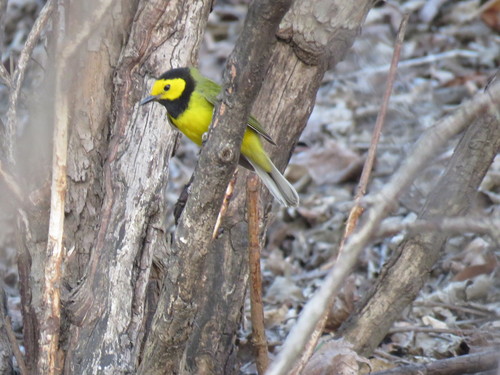
Hooded Warbler (Setophaga citrina) Hooded Warbler
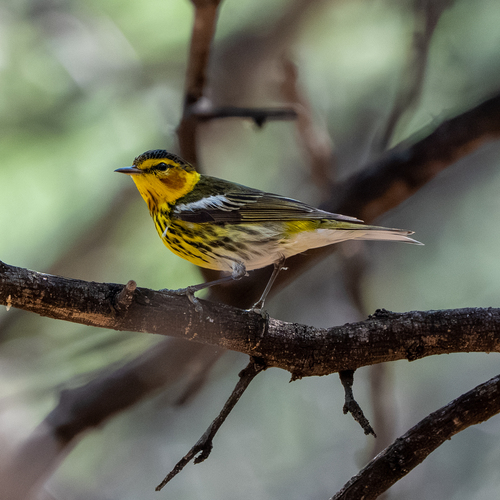
Cape May Warbler (Setophaga tigrina) Cape May Warbler

Media

Loading…

In short

The Hooded Warbler and Cape May Warbler can be distinguished by their plumage and behavior. The Hooded Warbler has a distinctive black hood and white tail spots, while the Cape May Warbler features a yellow breast streaked with black and chestnut ear-patches. Behaviorally, the Hooded Warbler is known for flicking its tail to reveal white spots, whereas the Cape May Warbler is often associated with spruce budworm outbreaks.

Identification tips

Size

Both species are small warblers, but there is no significant size difference noted between them.

Plumage

The Hooded Warbler male has a striking black hood and bright yellow face and underparts. Females and immatures may have less pronounced hoods. The Cape May Warbler, especially the male, shows a yellow breast with black streaks, a yellow rump, white wing-patches, and chestnut ear-patches. Females and immatures of the Cape May Warbler are less boldly colored.

Behaviour

Hooded Warblers are known for their tail-flicking behavior, which reveals white spots on the outer tail feathers. Cape May Warblers are often linked to spruce budworm outbreaks and may be seen feeding on nectar with their semitubular tongue.

Habitat

Hooded Warblers are 'gap specialists' found in dense understory of forest edges in the eastern U.S. and southern Canada. Cape May Warblers breed in coniferous forests, especially during spruce budworm outbreaks, and migrate through various habitats.

Voice

Both species have distinctive songs, but specific vocal differences are not detailed in the sources.

Submit a better description

Use the same sections as the comparison. Your text is published immediately.

The Hooded Warbler and Cape May Warbler can be distinguished by their plumage and behavior. The Hooded Warbler has a distinctive black hood and white tail spots, while the Cape May Warbler features a yellow breast streaked with black and chestnut ear-patches. Behaviorally, the Hooded Warbler is known for flicking its tail to reveal white spots, whereas the Cape May Warbler is often associated with spruce budworm outbreaks.

  • Look for the black hood on the male Hooded Warbler and white tail spots during tail flicking.
  • Identify the Cape May Warbler by its yellow breast with black streaks and chestnut ear-patches.
  • Consider habitat: Hooded Warblers prefer dense understory, while Cape May Warblers are linked to coniferous forests and budworm outbreaks.
  • Observe behavior: Hooded Warblers flick their tails, while Cape May Warblers may be seen feeding on nectar.

Both species are small warblers, but there is no significant size difference noted between them.

The Hooded Warbler male has a striking black hood and bright yellow face and underparts. Females and immatures may have less pronounced hoods. The Cape May Warbler, especially the male, shows a yellow breast with black streaks, a yellow rump, white wing-patches, and chestnut ear-patches. Females and immatures of the Cape May Warbler are less boldly colored.

Hooded Warblers are known for their tail-flicking behavior, which reveals white spots on the outer tail feathers. Cape May Warblers are often linked to spruce budworm outbreaks and may be seen feeding on nectar with their semitubular tongue.

Hooded Warblers are 'gap specialists' found in dense understory of forest edges in the eastern U.S. and southern Canada. Cape May Warblers breed in coniferous forests, especially during spruce budworm outbreaks, and migrate through various habitats.

Both species have distinctive songs, but specific vocal differences are not detailed in the sources.

Discard your changes?

You have unsaved edits. If you leave now, those changes will be lost.

Hooded Warbler · Cape May Warbler · My Tricky Birds