
Olive-sided Flycatcher vs Abert's Towhee
Contopus cooperi versus Melozone aberti
Play a quiz with Olive-sided Flycatcher and Abert's Towhee
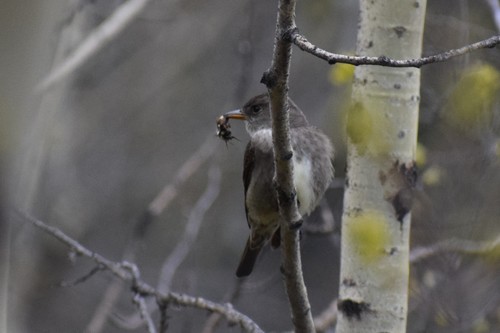 Olive-sided Flycatcher
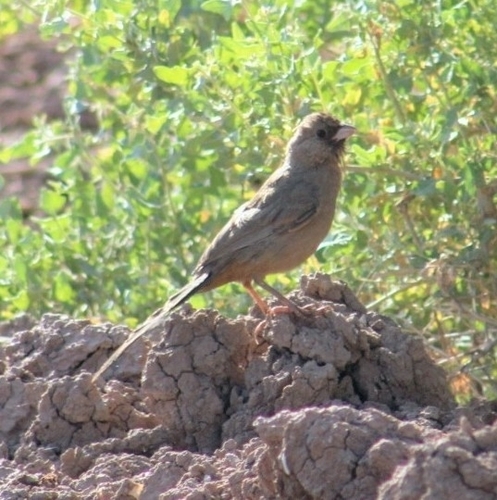 Abert's Towhee
In short
The Olive-sided Flycatcher and Abert's Towhee are easily distinguished by their behavior and habitat preferences. The Olive-sided Flycatcher is a perch-and-sally insectivore, while Abert's Towhee is a ground forager. Their plumage and vocalizations also differ significantly.
Identification tips
1. Behavior: Look for the Olive-sided Flycatcher perched high, sallying for insects, versus Abert's Towhee on the ground scratching for food. 2. Plumage: Note the Olive-sided Flycatcher's white rump patches and darker plumage compared to the uniform brown of Abert's Towhee. 3. Habitat: Consider the habitat; Olive-sided Flycatcher prefers open forests, while Abert's Towhee is found in dense, brushy areas.
Plumage
Olive-sided Flycatcher has a more streamlined appearance with a darker, olive-toned plumage and a distinctive white patch on the sides of the rump. Abert's Towhee is bulkier, with a more uniform brownish coloration and lacks the white rump patch.
Behaviour
Olive-sided Flycatcher perches high and sallies out to catch insects in flight. In contrast, Abert's Towhee spends most of its time on the ground, scratching for insects and seeds.
Habitat
Olive-sided Flycatcher is typically found in open forests and edges, often near water. Abert's Towhee prefers dense, brushy habitats and suburban areas, often near the ground.
Voice
Olive-sided Flycatcher is known for its loud, clear 'quick, three beers' song. Abert's Towhee has a distinctive squeal duet used by pairs, especially during the breeding season.