
White-fronted Bee-eater vs Karoo Long-billed Lark
Merops bullockoides versus Certhilauda subcoronata
Play a quiz with White-fronted Bee-eater and Karoo Long-billed Lark
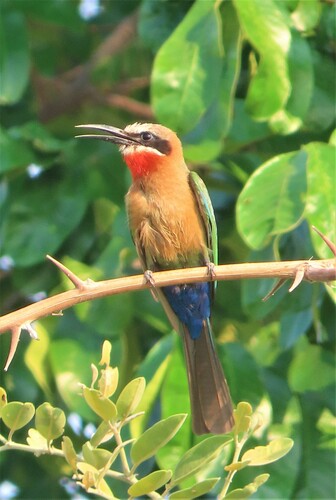 White-fronted Bee-eater
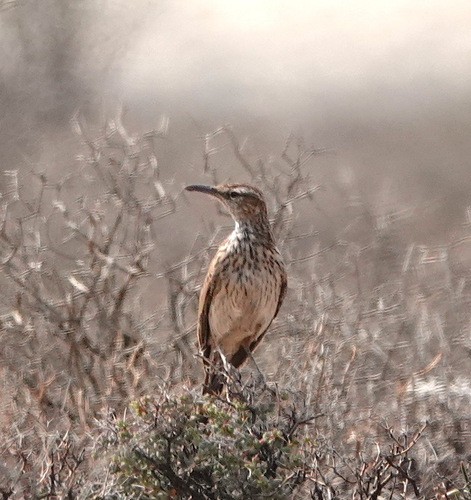 Karoo Long-billed Lark
In short
The White-fronted Bee-eater and Karoo Long-billed Lark are easily distinguished by their habitat and plumage. The bee-eater is colorful with distinctive white and green markings, while the lark is more subdued with sandy-rufous tones and streaking. They occupy different habitats, with the bee-eater favoring open woodlands and the lark preferring arid shrublands.
Identification tips
1. Habitat: Observe the environment; bee-eaters are in open woodlands, larks in arid shrublands. 2. Plumage: Look for the bee-eater's bright colors versus the lark's sandy and streaked appearance. 3. Supercilium: Note the lark's whitish supercilium and eye-ring, absent in the bee-eater.
Plumage
The White-fronted Bee-eater is brightly colored with a white forehead and green upperparts, contrasting with the Karoo Long-billed Lark's sandy-rufous upperparts and streaked appearance. The lark has a whitish supercilium and eye-ring, and its underparts are mainly whitish with dark brownish spots and streaks.
Habitat
White-fronted Bee-eaters are typically found in open woodlands, while Karoo Long-billed Larks inhabit dwarf and grassy shrublands on stony plains and rocky ridges.
White-fronted Bee-eater · Karoo Long-billed Lark · My Tricky Birds