Birdr

Yellow-bellied Flycatcher vs Buff-rumped Warbler

Empidonax flaviventris versus Myiothlypis fulvicauda

Play a quiz with Yellow-bellied Flycatcher and Buff-rumped Warbler
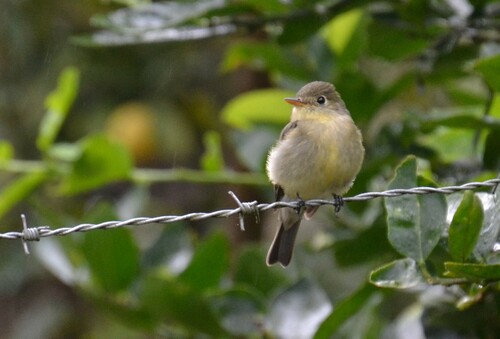
Yellow-bellied Flycatcher (Empidonax flaviventris) Yellow-bellied Flycatcher
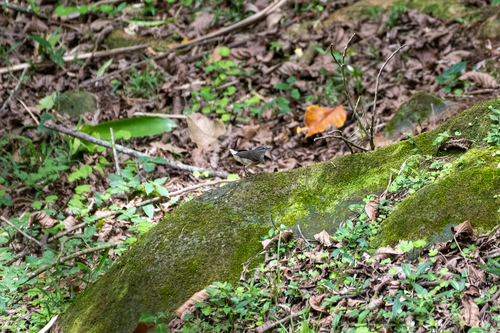
Buff-rumped Warbler (Myiothlypis fulvicauda) Buff-rumped Warbler

Media

Loading…

In short

The Yellow-bellied Flycatcher and Buff-rumped Warbler are distinct in both appearance and habitat. The flycatcher is a small, insectivorous bird often found in cool, moist coniferous forests, while the warbler is typically seen near streams in tropical forests. Key differences include the flycatcher's more muted plumage and the warbler's distinctive buff rump.

Identification tips

Look for the buff rump on the Buff-rumped Warbler, especially when it is in flight. The Yellow-bellied Flycatcher is best identified by its yellowish underparts and olive-green upperparts. Note the habitat: flycatchers are in cooler, northern forests, while warblers are near tropical streams.

Size

The Yellow-bellied Flycatcher is slightly smaller and more compact than the Buff-rumped Warbler.

Plumage

The Yellow-bellied Flycatcher has a yellowish belly and olive-green upperparts, blending well with mossy environments. In contrast, the Buff-rumped Warbler features a buff-colored rump, which is a distinctive field mark, and generally has a more contrasting plumage with darker upperparts.

Behaviour

Yellow-bellied Flycatchers are often elusive and more likely to be heard than seen, while Buff-rumped Warblers are more active and conspicuous, often seen foraging near water.

Habitat

Yellow-bellied Flycatchers breed in cool, moist conifer or mixed forests, bogs, and swamps. Buff-rumped Warblers prefer tropical forest edges and are commonly found near streams.

Voice

The Yellow-bellied Flycatcher's call is soft and can be confused with other flycatchers, while the Buff-rumped Warbler's song is more distinctive and often heard near water.

Submit a better description

Use the same sections as the comparison. Your text is published immediately.

The Yellow-bellied Flycatcher and Buff-rumped Warbler are distinct in both appearance and habitat. The flycatcher is a small, insectivorous bird often found in cool, moist coniferous forests, while the warbler is typically seen near streams in tropical forests. Key differences include the flycatcher's more muted plumage and the warbler's distinctive buff rump.

Look for the buff rump on the Buff-rumped Warbler, especially when it is in flight. The Yellow-bellied Flycatcher is best identified by its yellowish underparts and olive-green upperparts. Note the habitat: flycatchers are in cooler, northern forests, while warblers are near tropical streams.

The Yellow-bellied Flycatcher is slightly smaller and more compact than the Buff-rumped Warbler.

The Yellow-bellied Flycatcher has a yellowish belly and olive-green upperparts, blending well with mossy environments. In contrast, the Buff-rumped Warbler features a buff-colored rump, which is a distinctive field mark, and generally has a more contrasting plumage with darker upperparts.

Yellow-bellied Flycatchers are often elusive and more likely to be heard than seen, while Buff-rumped Warblers are more active and conspicuous, often seen foraging near water.

Yellow-bellied Flycatchers breed in cool, moist conifer or mixed forests, bogs, and swamps. Buff-rumped Warblers prefer tropical forest edges and are commonly found near streams.

The Yellow-bellied Flycatcher's call is soft and can be confused with other flycatchers, while the Buff-rumped Warbler's song is more distinctive and often heard near water.

Discard your changes?

You have unsaved edits. If you leave now, those changes will be lost.

Yellow-bellied Flycatcher · Buff-rumped Warbler · My Tricky Birds