
Red-necked Phalarope vs Black-faced Waxbill
Phalaropus lobatus versus Brunhilda erythronotos
Play a quiz with Red-necked Phalarope and Black-faced Waxbill
 Red-necked Phalarope
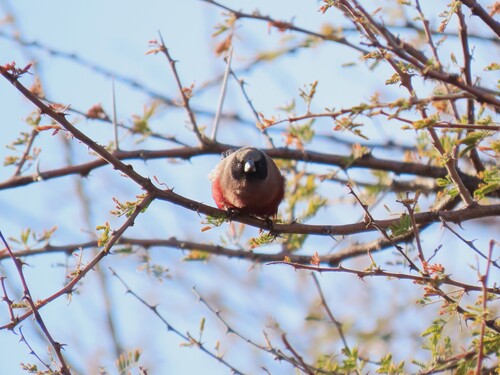 Black-faced Waxbill
In short
The Red-necked Phalarope and Black-faced Waxbill are easily distinguished by their habitats and plumage. The phalarope is a pelagic bird with a slender bill and piratical black eye-patches, while the waxbill is a terrestrial bird with a distinctive black face and red flanks.
Identification tips
- Habitat: Look for Red-necked Phalaropes in marine environments; Black-faced Waxbills are found on land.
- Plumage: Note the black eye-patches on the phalarope and the black face with red flanks on the waxbill.
- Behavior: Observe the spinning feeding behavior of the phalarope.
Size
The Black-faced Waxbill is smaller, measuring 11–12 cm, compared to the Red-necked Phalarope's more slender and elongated body.
Plumage
The Red-necked Phalarope has a largely white body with gray mantles and black eye-patches, while the Black-faced Waxbill features a black face, grey-brown upperparts with a pinkish wash, and deep red flanks.
Behaviour
Red-necked Phalaropes are known for spinning in circles on water to feed, a behavior not seen in Black-faced Waxbills.
Habitat
Red-necked Phalaropes are pelagic, often found at oceanographic fronts, while Black-faced Waxbills inhabit terrestrial environments.
Voice
The Black-faced Waxbill has a high-pitched 'tip-tip' call and a whistled 'tee' song, while there is no specific vocalization noted for the Red-necked Phalarope.
Red-necked Phalarope · Black-faced Waxbill · My Tricky Birds