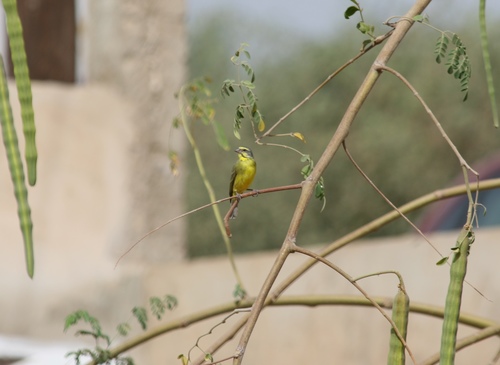
Yellow-throated Longclaw vs Yellow-fronted Canary
Macronyx croceus versus Crithagra mozambica
Play a quiz with Yellow-throated Longclaw and Yellow-fronted Canary
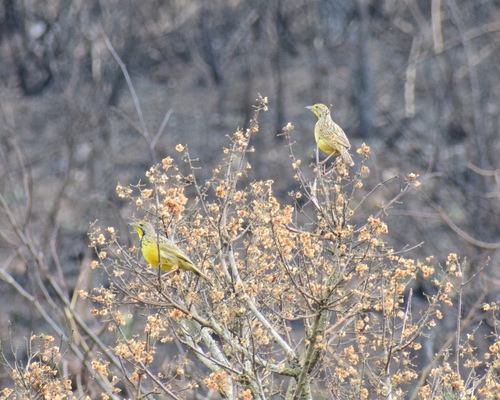
Yellow-throated Longclaw
Yellow-fronted Canary
In short
The Yellow-throated Longclaw and the Yellow-fronted Canary can be distinguished primarily by their size and bill shape. The Longclaw is larger with a slender, pointed bill, while the Canary is smaller with a stout, conical bill. Both have yellow underparts but differ in their head and throat markings.
Identification tips
- Size and Shape: Look for the larger size and slender bill of the Longclaw compared to the smaller, stout-billed Canary. 2. Throat and Face: Note the Longclaw's yellow throat with a black necklace versus the Canary's plain yellow face. 3. Habitat: Observe the environment; Longclaws are in open grasslands, Canaries in varied habitats. 4. Behavior: Longclaws are ground-dwelling, Canaries are often perched. 5. Vocalization: Listen for the Longclaw's whistles versus the Canary's trills.
Size
The Yellow-throated Longclaw is larger than the Yellow-fronted Canary.
Plumage
The Longclaw has a distinct yellow throat bordered by a black necklace and a streaked back, whereas the Canary has a yellow face with a greenish back and lacks the black necklace.
Behaviour
The Longclaw often walks or runs on the ground in open grasslands, while the Canary is more likely to be seen perching in trees or bushes.
Habitat
The Longclaw prefers open grasslands and savannas, whereas the Canary is found in a variety of habitats including woodlands, gardens, and scrublands.
Voice
The Longclaw's song is a series of melodious whistles, whereas the Canary's song is a more complex series of trills and warbles.
Yellow-throated Longclaw · Yellow-fronted Canary · My Tricky Birds